 TimelyScholar
Services › Literature Reviews
Literature reviews for dissertations, theses and research papers that search systematically, evaluate critically and synthesise clearly.
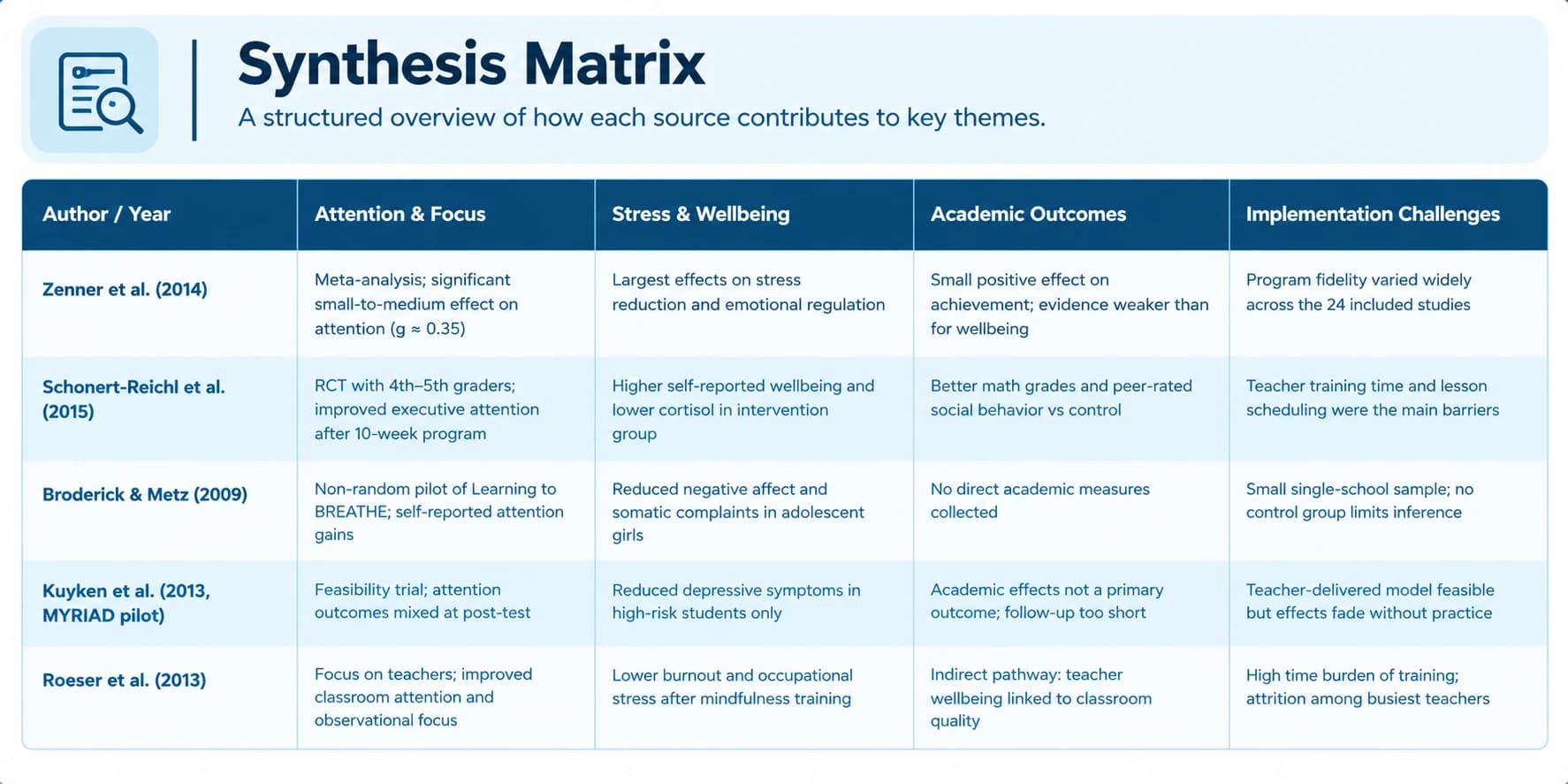
A strong literature review does more than summarise sources. It shows what is known, how well it is known and where the gap lies that your research will fill. Grant and Booth's typology describes 14 types of review, from narrative and critical reviews to systematic and scoping reviews; choosing the right one is the first step.
We help you find the literature with a documented search, evaluate each source critically, organise it in a literature review matrix and write a synthesis structured around themes, not a list of studies.
Structured searches of the right databases, with keywords, subject headings and a record of what was searched.
Critical appraisal of methods, relevance and quality, using recognised appraisal tools where appropriate.
A thematic synthesis that compares studies, identifies patterns and makes the research gap explicit.
A matrix (Excel or Word) summarising each source's aims, design, findings and limitations.
Clear structure, academic style and consistent referencing (APA 7, Harvard, Vancouver and others).
We agree the question, scope, review type and required length.
We search and screen the literature and share the list of key sources.
We appraise sources and build the literature review matrix.
We draft a thematic review that leads logically to your research gap.
You request refinements within the agreed scope.
Our methods follow published standards from recognised authorities, so your work holds up to supervisors, examiners and peer reviewers.
| Standard | What it covers | Source |
|---|---|---|
| Review typology | 14 review types and when to use each | Grant MJ, Booth A. A typology of reviews: 14 review types. Health Info Libr J 2009;26:91-108 |
| Harvard Library research guide | Searching the biomedical literature systematically | Harvard Library: Systematic Reviews and Meta-Analysis research guide |
| JBI critical appraisal tools | Checklists for appraising individual studies | JBI Critical Appraisal Tools |
| APA JARS | Reporting standards for the research you review and write | APA Style: Journal Article Reporting Standards (JARS) |
There is no fixed number. It depends on your level, topic and institution's guidance. We aim for coverage of the key and most current evidence rather than a count.
A table that records each source's purpose, methods, findings and limitations, making it easier to compare studies and write a synthesis.
No. A systematic review follows explicit, pre-specified methods to find and appraise all relevant studies. Most dissertation literature reviews are narrative or critical reviews. See our systematic review service if you need one.
APA 7, Harvard, Vancouver, AMA, Chicago and MLA, or your institution's style.
Yes. Your files are stored privately and only the people working on your project can open them. We sign a non-disclosure agreement on request.
Yes. After delivery you can request refinements within the agreed scope directly from your client dashboard.
Every project gets an itemised quote based on scope, complexity and deadline. You pay only after you accept the quote.
Request a free quote online, message us on WhatsApp or email us. A specialist will reply with an itemised quote within 2-4 business hours.
You remain the author. For publications, the ICMJE recommends acknowledging writing assistance and editing rather than listing it as authorship. For coursework, follow your institution's academic integrity policy.
Describe your project and a specialist will reply with an itemized quote within 2-4 business hours.
Prefer email? info@timelyscholar.com